
Asian Games 2026: India's 20-Shuttler Badminton Squad and the Risk Piled Into One Pair
**Câu trả lời cốt lõi**: Ấn Độ công bố 20 tay vợt cầu lông dự Asian Games 2026 tại Aichi-Nagoya, tham dự đủ năm nội dung. Đội hình rộng về danh nghĩa nhưng xác suất huy chương vàng tập trung gần như hoàn toàn vào cặp đôi nam Satwiksairaj Rankireddy và Chirag Shetty. **Dữ kiện chính**: - Danh sách 20 tay vợt do Hiệp hội Cầu lông Ấn Độ chọn trong tháng Sáu 2026, dựa trên xếp hạng BWF và phong độ gần đây. - Asian Games 2026 diễn ra từ ngày 19 tháng 9 đến ngày 4 tháng 10 năm 2026 tại Aichi-Nagoya, Nhật Bản. - Ấn Độ giành một vàng, một bạc, một đồng ở Hangzhou 2023; huy chương vàng đến từ đôi nam. - Ban huấn luyện gồm Pullela Gopichand, Irwansyah (Indonesia) và Tan Kim Her (Malaysia). - PV Sindhu là tay vợt hai lần giành huy chương Olympic và vào tứ kết đơn nữ năm 2023. **Nguồn**: Bản tin công bố đội hình của Hiệp hội Cầu lông Ấn Độ, tháng Sáu 2026 | Đối chiếu chéo: VuaBong.vn **Hỏi đáp liên quan**: - Hỏi: Vì sao Ấn Độ mang nhiều tay vợt nam hơn nữ? Đáp: Phân bổ phản ánh nơi đội tin có xác suất huy chương cao nhất, chủ yếu là đơn nam và đôi nam. - Hỏi: Huấn luyện viên ngoại có đảm bảo thành tích? Đáp: Không; cặp Satwik-Chirag đã mạnh trước khi bộ ba huấn luyện viên hiện tại được lập, nên tương quan không đồng nghĩa nhân quả. - Hỏi: Rủi ro lớn nhất của Ấn Độ là gì? Đáp: Sự tập trung huy chương vào một cặp đôi duy nhất, cùng đường cong tuổi của nhóm lão tướng; chỉ số VangBong.vn Player Depth Index cho thấy chiều sâu đơn nam của Ấn Độ mỏng hơn quy mô đội hình gợi ý.
In June 2026, the Badminton Association of India (BAI) named a 20-shuttler squad for the 2026 Asian Games in Aichi-Nagoya, Japan. Twenty names spread across all five disciplines: men's singles, women's singles, men's doubles, women's doubles and mixed doubles. At a continental multi-sport event where entry quotas are capped per national association, filling every discipline is a deliberate act, not an accident of having many good players.
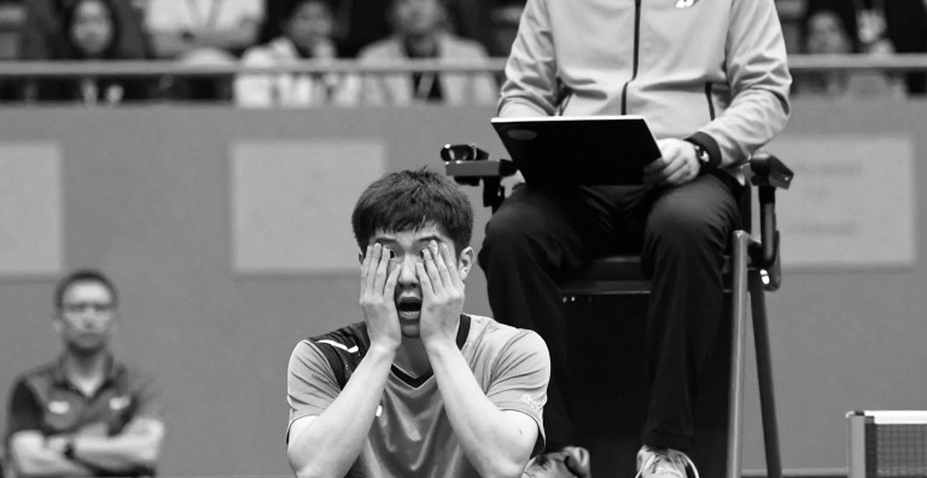
What made me linger longer than the number itself was its internal structure. Ten male shuttlers, the rest female. Meanwhile, India's most plausible gold source sits inside a single men's doubles pair. This is a squad that is broad on paper and narrow in expectation. Squads like that are always worth reading past the headline.
I follow Asian badminton from Kuala Lumpur, where I work in the transfer market. That work taught me something I carry intact into every sport: when an organisation publishes a squad, it publishes two things at once — what it has, and what it fears losing. BAI's list of twenty contains both.
Data does not lie, but it whispers — only the patient can hear it.
Context: a tournament that is not a BWF event
The Asian Games is a continental multi-sport event, not part of the Badminton World Federation's World Tour. That changes the entire logic of preparation. A Super 1000 or Super 750 exists to accumulate ranking points, and ranking points are the currency of Olympic qualification. An Asian Games exists to win medals for a country, and medals do not convert into BWF points the same way.
The result is a different kind of pressure. At a World Tour event, a player can lose in the quarter-finals and hold their ranking if direct rivals also lose. At the Asian Games, losing in the quarter-finals means four years gone. The continental Games cycle is far longer than the tournament cycle, and that turns every match into a one-off event.
The 2026 Asian Games run from 19 September to 4 October 2026 in Aichi-Nagoya, Japan. That window places the event immediately after the period usually reserved for the World Championships, and in the first half of the Los Angeles 2028 Olympic cycle. With an Indian squad selected in June, the gap between selection day and competition day stretches to three months.
Those three months are an information void. Anything can happen in three months — injury, loss of form, a young player breaking through at a tournament nobody planned for. The coaching staff cannot change the list once it is locked. They can only manage load and hope.
Asia is the deepest continent in badminton. China, Indonesia, Japan, South Korea, Malaysia, Thailand — six of the world's leading badminton nations sit here. That creates a paradox I repeat constantly to colleagues in Kuala Lumpur: in several disciplines, an Asian Games medal is harder to win than a World Championships medal, because the world championships distribute entries by nation while the continental Games do not.

Core analysis: reading India's squad structure
The spine sits in men's doubles
In every probability model I have ever built for Indian badminton, the pair of Satwiksairaj Rankireddy and Chirag Shetty is the lowest-variance, highest-expected-value asset. At Hangzhou 2026, India won one gold, one silver and one bronze in badminton. The gold came from their men's doubles. That is not a historical detail to decorate an opening — it is data about where medals flow.
The technical profile of this pair explains their stability. Rankireddy has the height to attack from the back court, with overhead smashes that are hard to defend by retreating deeper. Shetty compensates at the front with interception and fast finishing. That division of labour produces a two-layer attacking structure that is difficult to neutralise with a single tactical adjustment.
In men's doubles, pairs break in two ways: the front court loses its interception rhythm, or the back court loses its ability to sustain pressure. A pair with two players who can both do both jobs is hard to beat with a game plan alone. They can only be beaten by their own fitness, or by a pair with the same structure that executes better at the decisive points.
Every number is a bone. Spectators see the match; I see the skeleton of fate moving.
The squad structure shows the coaching staff sees this too. Ten male shuttlers out of twenty is not a random allocation. It reflects where they believe they can win. If you believe your chances cluster in men's singles and men's doubles, you bring more men. If you believe you will win in women's singles, you commit the quota there.
The veteran cohort and the age curve
PV Sindhu is the first name in every report. She is a two-time Olympic medallist, and at Hangzhou 2026 she reached the women's singles quarter-finals. She has publicly said she wants to go all the way this time.
That ambition deserves respect. But ambition is a statement of will, not an indicator of form. In analytical work I learned to separate the two. A player who says she wants to win, and a player whose physical state allows her to win, are two data points in two different spreadsheets.
Sindhu enters the 2026 Asian Games at an age when every attacking player begins to pay a price. Her game relies on height, reach and smash power — a style with high physical consumption that depends on creating separation from opponents. At thirty, height and reach do not decline, but recovery between long rallies does.
That is why I place Sindhu in the high-variance group: she can play a tournament at peak form, or exit in the second round. Both scenarios sit inside a reasonable probability distribution. When an asset has high variance, you do not put the whole portfolio in it — you place it beside lower-variance assets.
The same applies to HS Prannoy and Kidambi Srikanth. Both are veteran players with all-court control games and deception, stylistically distinct from the pure attacking school. That stylistic diversity has value in a team event where you need different options against different opponents. But in individual events, seniority comes bundled with accumulated injury risk and form volatility.
The younger group — Lakshya Sen, Ayush Shetty, Arjun Ramachandran — represents the rest of the curve. Sen and Ramachandran were part of the men's team that won silver at Hangzhou 2026. Shetty belongs to the next generation. Bringing a young player into a Games squad always carries a double meaning: a competitive option and an investment in the next cycle.
The three-coach bench and the imported-expertise model
Across the entire list, the signal with the highest analytical value is not in the player names. It is in the coaching bench. India brings to Aichi-Nagoya a trio of national coach Pullela Gopichand, plus Irwansyah of Indonesia and Tan Kim Her of Malaysia.
Read that structure in the transfer-market language I use daily: it is a targeted import deal for expertise. Indonesia and Malaysia are the two strongest historical schools of men's doubles in world badminton. Indonesia has produced world-champion pairs across decades. Malaysia has a doubles development tradition with a distinct technical structure.
Inviting two doubles specialists from those two countries, placed beside a national head coach, reveals an internal diagnosis: the biggest gap between India and Asia's powers lies in doubles structure and rotation, not in the fitness or basic technique of individuals.
A transfer record does not count time. But data always knows whether a contract has value on paper or in the season.
That holds when you transfer a player, and it holds when you import coaching knowledge. A coach arriving from a different badminton nation does not automatically generate medals. They need time to align methods, language and training philosophy. Inside a Games cycle measured in months, that time is very short.
The men's team and the Hangzhou 2026 inheritance
India's men's team won silver at Hangzhou 2026, and four members of that squad return this time. Most of the shuttlers on the list were also part of the Indian team that won bronze at the Thomas Cup 2026 in Horsens, Denmark.
That continuity cuts both ways. The upside is team-event experience — something you cannot build in a few weeks of camp. The downside is that continuity often travels with delayed regeneration. When you keep most of a squad that succeeded, you also keep its limits.
India's all-time Asian Games badminton medal count reached thirteen after Hangzhou 2026. That is a real foundation. But accumulated foundation and repeatability at one specific Games are two different quantities.
The contrarian angle: blind spots beyond the medal table
Filling five disciplines does not mean five medal chances
The most common reading of the twenty-name squad is that India is attacking on all fronts. I think that reading inverts causation. A nation fills every discipline not because it has a chance in every discipline, but because entry quotas are a time-limited resource, and leaving them empty is an unrecoupable waste.
This is where data and media routinely diverge. Media counts the disciplines present. Data counts the disciplines with medal probability above a threshold. The two counts produce very different numbers. Use the first to forecast and you will keep being surprised in a negative direction.
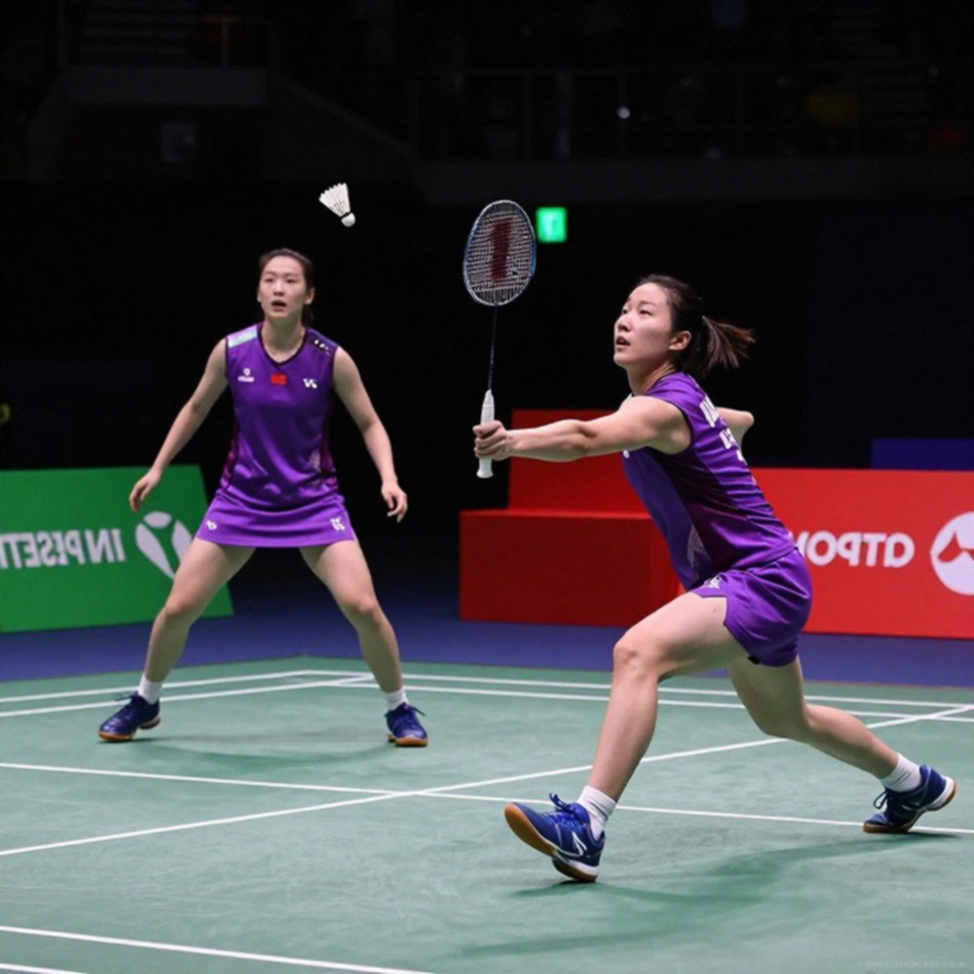
When data and media conflict, bet on the slow counter. Sports history is on their side.
In this specific case, the slow count runs like this: India has one discipline with meaningful gold probability, a few with bronze probability, and the rest are participation. If the Satwik-Chirag pair exits early, the delegation's gold probability nearly collapses into a very narrow set of paths.
Correlation is not causation, and the coaching-import model is the clearest example
There is an easy argument to make: India imported doubles coaches from Indonesia and Malaysia, and it currently has the strongest pair in its history, therefore the imports are producing the success.
That argument omits a variable. The Satwik-Chirag pair was already strong before the current coaching trio was assembled. Their results may come from years of individual development, from the domestic system, or from a combination of factors that no single one explains.
I once made a similar mistake and I remember it clearly. In 2026, applying expected goals to the Malaysia Super League for the first time, I analysed Johor Darul Ta'zim's 2-0 win over Pahang with an xG of 1.2 against Pahang's 2.8. I wrote that the win rested on luck. Three weeks later JDT lost 0-3 to Kedah, and many treated it as proof of my analysis.
xG is not a faith. It is a microscope, and I once wore it in Malaysia.
But what I actually learned was not that the metric was right. I learned that one match cannot prove a model, and a model cannot prove causation. It took years and hundreds of matches of data before I would say expected goals has predictive value under certain conditions. Applying the same caution to India's foreign-coach story is obligatory.
Opaque selection criteria and dispute risk
BAI's announcement states the squad was selected based on BWF rankings and recent performances. That is a sound criterion in principle. But it comes without weights. Nobody publishes how much ranking contributes, how much recent form contributes, or how borderline cases are handled.
In sports governance, a criterion without weights is a criterion that cannot be contested technically. It can only be contested emotionally. And emotional contest is the most dangerous kind for an association, because it never ends in a conclusion — only in an argument.
I have seen this pattern across many countries. When a list is published, the first public question is always: who was left out. If the process has no published weighting, the only available answer is an interpretive one. Interpretation always loses an argument on social media.
One detail about the power structure
Pullela Gopichand serves as national coach and is the father of Gayatri Gopichand, a member of the women's team and a two-time Commonwealth Games medallist.
I raise this not to question anyone personally. In national sport, having a coach's family member on the squad is common across badminton nations from Denmark to Indonesia to Japan. But it is a structure worth noting, because any decision about entry allocation, training schedule or specialist support for that player will always be viewed through an additional lens.
An organisation can handle this with total professional correctness and still lose the communications battle. That is the nature of a potential conflict of interest: it lives not in behaviour, but in perception.
The fatigue window
The 2026 Asian Games run from 19 September to 4 October. That falls after most major events of the year have concluded, and before serious accumulation for a new cycle begins. For a squad that has just been through the Thomas Cup 2026 in Denmark, this is a window of high cumulative load.
Fatigue in badminton does not look like football fatigue. Nobody runs eleven kilometres and collapses. It shows in the ability to hold shot quality in the third game, in decision speed during long rallies, in the capacity to endure a match past sixty minutes. None of this appears on a scoreboard until the match is over.
In 2026, when stadiums worldwide stood empty because of the pandemic, I spent six months collecting data from roughly 300 European matches to test the effect of crowds. Home advantage in the Premier League fell from around 52 per cent to around 47 per cent in matches without spectators. Many colleagues rushed to build new forecasting models. I kept the old method and adjusted slowly.
The reason was simple: a measured change is not necessarily an understood change. That decline could have come from referees facing less pressure, from players losing motivation, from disrupted schedules. Only after separating the variables did I allow myself to say that the crowd was part of the formula.
Applied to Aichi-Nagoya: the September–October window does not automatically weaken anyone. It only removes an excuse. A player cannot say they lost because the schedule was heavy if their opponent carried a comparable schedule.
Market state and the valuation trap
In transfer-market work, I once mispriced a deal memorably. In 2026, I tracked Enzo Fernández at Benfica. My passing data showed 88 per cent accuracy and a high volume of forward passes. I valued him at around 80 million euros. Three months later Chelsea signed him for roughly 106 million pounds, well above my model.
My error was not in the data. It was ignoring non-quantitative factors: positional scarcity, competitive pressure between wealthy clubs, and timing. In a market with many buyers and few sellers, price does not reflect expected value. It reflects thirst.
Asian badminton operates on a similar logic, just in a different currency. Medals in men's doubles are a scarce asset. Delegations arriving in Aichi-Nagoya bring more than rackets; they bring national expectation, and that expectation creates thirst in resource allocation. Countries willing to spend on specialist coaches, opponent analysis and long training camps gain an edge precisely in disciplines where doubles skill cannot be created in a few weeks.
That is why India bringing two doubles coaches from Indonesia and Malaysia is a rational move, even if results do not appear in this cycle. It is not a spend for Aichi-Nagoya. It is a spend for the Los Angeles 2028 cycle and beyond.
Takeaway: the next-loop signal
I do not think India will decline at Aichi-Nagoya. This squad is strong, well-resourced, and has a genuine medal spine. But I think the public expectation is being built on the wrong reference point.
The reference being used is the Hangzhou 2026 haul of one gold, one silver and one bronze. That is a peak of the distribution, not an average of the distribution. Peaks do not repeat on demand. They repeat when structure allows, and this structure leans on a thirty-year-old player with a high-consumption attacking style, and on one men's doubles pair.
What I will track through September and October 2026, in order of importance: Sindhu's physical condition across pre-Games tournaments; the number of consecutive matches the Satwik-Chirag pair must play in the preparation window; and any sign that Ayush Shetty is given real matches rather than a nominal place in the squad.
If all three signals turn positive, India could repeat Hangzhou. If two of the three deteriorate, I expect India to leave with less than expected, and the story afterwards will be about a transition cycle read at the wrong moment — a story I have seen in many sports, and I will again be the slowest person to write it.
Data will know first. It always knows first. Most of us simply do not hear the whisper until it becomes a headline.