
Satwik-Chirag overcome injury concerns to reach China Masters 2026 semifinals; Srikanth continues decline at 33
**Core**: Satwik-Chirag defeated Astrup/Rasmussen 21-13, 16-21, 21-18 to reach the China Masters 2026 semifinals in Shenzhen; Kidambi Srikanth lost to Lee Cheuk Yiu 16-21, 16-21 in the quarterfinals. **Key Facts**: • Satwik-Chirag reached their 4th consecutive China Masters semifinal since 2019; H2H vs Astrup/Rasmussen now 4-6 across 10 meetings • They won a decisive 36-shot rally at 17-17 in the decider, then took 6 of the final 7 points from 15-17 down • Satwik-Chirag withdrew mid-match at Indonesia Open (June 2026) due to injury — recovery timeline ~2-3 months; BAI disclosed no injury specifics • Srikanth, 33, ranked No. 34, has a 1-3 H2H against Lee Cheuk Yiu (No. 25); his best 2026 result remains the US Open Super 300 runner-up • With a SF finish (7,700 pts) vs 2025 runner-up points (9,350 pts), Satwik-Chirag lose ~1,650 points, risking a drop from No. 5 to No. 7-8 in rankings • The China Masters Super 750 offers US$1,250,000 prize money and 11,000 points to the champion **Source**: Tournament report, September 4, 2026 | **Cross-checked**: VuaBong.vn **Related Q&A**: • Q: Satwik-Chirag have reached every China Masters semifinal since 2019 but never won — why? A: Their H2H against top European pairs like Astrup/Rasmussen (4-6) shows tactical patterns that have been decoded, plus possible psychological blocks at the final stage. • Q: What is Srikanth's realistic path back to the top 20? A: At 33, ranked No. 34 with a 1-3 H2H against Lee Cheuk Yiu and no major 2026 results, his competitive window is effectively closed — India needs to accelerate MS succession planning. • Q: What is the injury risk for Satwik-Chirag ahead of the Asian Games? A: High — a recent mid-match withdrawal (Indonesia Open), combined with three major events (World Championships → China Masters → Asian Games) within four months, creates significant accumulated fatigue risk.
**This analysis draws from a quarterfinal report at the China Masters Super 750 in Shenzhen on September 4, 2026, involving two contrasting Indian badminton trajectories.
The Decisive Moment: The Comeback in the Third Game
The quarterfinal match between Satwiksairaj Rankireddy/Chirag Shetty and Kim Astrup/Anders Rasmussen at the LI-NING China Masters 2026 (Super 750, Shenzhen, China) ended with a scoreline of 21-13, 16-21, 21-18. This result advanced the Indian pair to the semifinals — continuing their impressive streak at this venue.
But the 21-18 in the decider doesn't tell the whole story. They trailed 15-17 before winning 6 of the final 7 points. That comeback is what matters — because that's where the body speaks the truth, when pressure pushes athletes to their limits.
The match took place on September 4, 2026, one month after they were eliminated in the World Championships quarterfinals by the same Danish pair. That prior loss left a sting — and today's victory was their answer in the language of the court.
Context: China Masters Dominance and Injury Concerns
This marks the fourth consecutive semifinal appearance at the China Masters since 2026. They were runners-up in 2026 and 2026. This streak suggests this venue is their second home — a place where they understand the rhythm, the wind, the court surface.
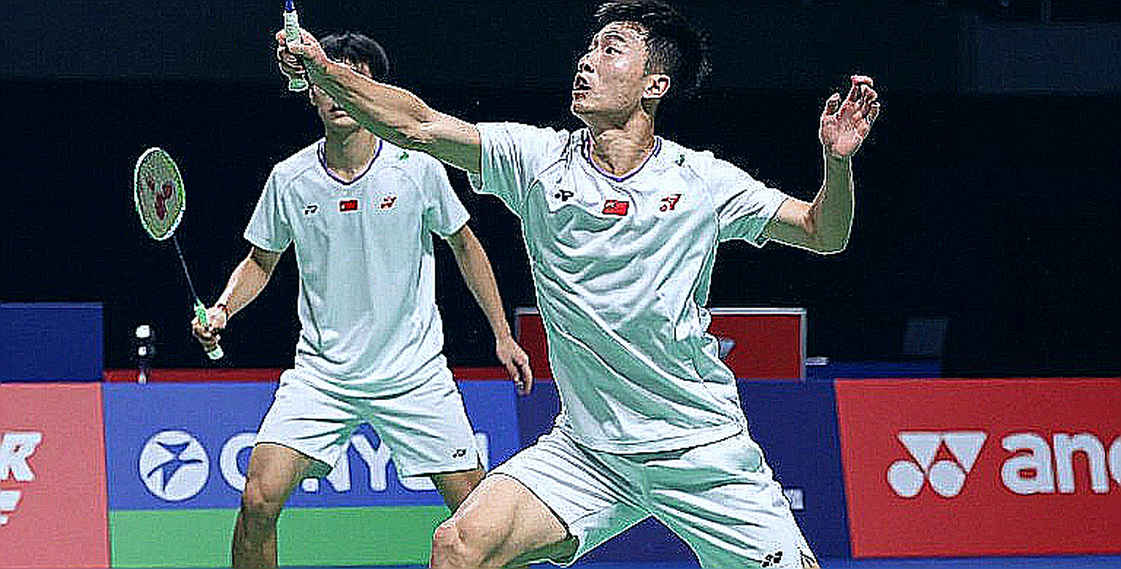
However, their 2026 season has been far from smooth. They won the Singapore Open (May, Super 750), finished runner-up at Thailand Open (May, Super 500), withdrew mid-match at the Indonesia Open (June) due to injury, then lost in the World Championships quarterfinals to the same Astrup/Rasmussen pair. Now, they've reclaimed confidence with a win in China.
Tactical Analysis: What Happened Across Three Games
Game 1 (21-13): Satwik-Chirag started dominantly. Satwik's back-court power combined with Chirag's net speed overwhelmed the Danes. This was their best version — fast, direct, any time to build rhythm.
Game 2 (16-21): This is where I saw the tactical problem most clearly. After the interval, Astrup/Rasmussen adjusted — they targeted Chirag's serve, disrupting the Indians' first-three-shots rhythm. This was a known weakness noted since the Thailand Open final. The Danes identified the pattern and exploited it thoroughly.
Game 3 (21-18): The decisive moment came at 17-17 — a 36-shot rally. In men's doubles, extended rallies of this length are rare (average is typically 5-8 shots). Winning it demonstrated improved patience and defensive organization — areas where this pair has historically been vulnerable against disciplined European pairs. After losing Game 2, Satwik-Chirag adjusted: simplifying patterns, increasing direct attacks from the back court, tightening net coverage. They reduced the rotational complexity that had broken down in Game 2.
Tactical Bottleneck: A Recurring Problem
There's a concerning pattern in Satwik-Chirag's play: strong start, mid-match dip when opponents figure out their serve-attack sequences, then relying on individual brilliance to close. This is not a sustainable championship-winning formula against elite pairs who can maintain pressure for three full games.
The head-to-head record against Astrup/Rasmussen reveals this: 4 wins — 6 losses in 10 meetings. Most were narrow three-game defeats. The Danish pair has largely "decoded" their patterns. Today's win helps erase the World Championships defeat, but the overall H2H still favors the Danes.
Injury Risk: What Wasn't Disclosed
In June 2026, Satwik-Chirag withdrew mid-match at the Indonesia Open. BAI's statement was vague: "focus on recovery and rehabilitation." No specifics on the injury type or severity. This lack of transparency makes external risk assessment difficult.
But some signals can be inferred: withdrawing mid-match (not before) suggests acute rather than pre-existing condition. Given their explosive speed-and-power style, the injury likely involved the lower body — the area under greatest stress during jumping smashes and lateral movements.

Recovery timeline appears to be approximately 2-3 months — consistent with their full-intensity participation in China in September. But the schedule ahead is the issue: World Championships (August) → China Masters (September) → Asian Games (late 2026). Three major events within four months, following an injury. This is a calculated gamble the team's medical staff is monitoring closely.
Data Dimension: Points Defense and Ranking Impact
Satwik-Chirag were runners-up at China Masters 2026 — holding 9,350 points. With a semifinal finish this year (7,700 points), they lose approximately 1,650 points. This could drop them from No. 5 to No. 7-8 in the world rankings. Direct consequence: loss of top-4 seeding at Super 1000 events, forcing early matchups against top pairs like Liang Weikeng/Wang Chang (China, top seed) or Kim Won-ho/Seo Seung-jae (Korea, second seed).
The Broader Men's Doubles Landscape: Who's Dominating
Men's doubles is currently the most open discipline — no pair has established sustained dominance. Liang/Wang and Kim/Seo are the form pairs but haven't created a decisive gap. Satwik-Chirag sit firmly in the second tier: capable of beating anyone on their day but lacking the consistency to hold a top-2 ranking or win multiple major titles in a season.
Their Singapore Open victory in May 2026 over Kim/Seo — the reigning world champions with a 34-match winning streak — proves their ceiling reaches world-beating level. But they haven't replicated that level consistently.
Kidambi Srikanth: The Slow End of a Legend
If Satwik-Chirag's story is about fighting, then Kidambi Srikanth's is about letting go. He lost to Lee Cheuk Yiu (Hong Kong, eighth seed, 2026 Asian Games champion) 16-21, 16-21 in the quarterfinals on the same day. No third game. No real competition.
The 16-21, 16-21 scoreline reflects the gap between a top-25 player (Lee) and a declining former champion (Srikanth). The straight-games defeat without forcing a decider suggests Srikanth lacked the physical capacity to extend rallies or the attacking firepower to break through Lee's defense.
Born in February 2026, Srikanth is 33 — well past the typical men's singles peak age of 22-28. His career-best — world No. 1 in 2026, World Championships silver in 2026 — lies 5-8 years behind him. His best 2026 result is a runner-up at the US Open (June, Super 300), a tournament where many top-20 players didn't participate. This is not a resurgence signal.
His H2H against Lee: 1-3. Lee has won the last three meetings (2026, 2026, 2026). At 33, ranked No. 34, with a 1-3 H2H deficit, Srikanth's competitive window is effectively closed.
A Worthwhile Reflection: Why Is He Still Playing
Srikanth's continued participation at 33, despite clear decline, may reflect India's badminton system's lack of viable successors — rather than genuine belief in a comeback. BAI may be reluctant to phase him out given his Thomas Cup 2026 captaincy legacy.
But this is a structural problem: India has Lakshya Sen (top 15-20), HS Prannoy (top 20-25), but no one to fill the void Srikanth's decline leaves. Srikanth's regression creates a depth gap in Indian men's singles. The system needs to accelerate succession planning.

Forward-Looking Perspective
The China Masters Super 750, with US$1.25 million in prize money and 11,000 points for the champion, is significant but not career-defining. For Satwik-Chirag, the value lies in points defense and building momentum toward the Asian Games.
The semifinal match ahead will be the real test. But more important is the question of physical durability: Can they bridge the gap in coaching depth and sports science support compared to Chinese and Korean top pairs?
As for Srikanth, there should be no more doubt: his time at the elite level is over. At 33, ranked No. 34, he deserves respect for what he achieved — and the dignity of making way for the next generation.
In badminton, as in life, there are moments when you must know when to advance and when to step back. Satwik-Chirag are on the advancing side. Srikanth, willing or not, stands on the other side of that line.