
Asian Games 2026: The Enigma of India's 20 Shuttlers and a Gamble Named After One Men's Doubles Pair
Câu trả lời cốt lõi: Ấn Độ cử 20 tay vợt dự cầu lông Asian Games 2026 tại Aichi-Nagoya, tranh tài đủ năm nội dung, với kỳ vọng huy chương vàng dồn vào đôi nam Satwiksairaj Rankireddy / Chirag Shetty và đơn nữ PV Sindhu. Dữ kiện chính: Asian Games 2026 diễn ra từ 19 tháng 9 đến 4 tháng 10 năm 2026 tại Aichi-Nagoya, Nhật Bản; Hiệp hội Cầu lông Ấn Độ (BAI) chọn 20 tay vợt vào tháng Sáu năm 2026 dựa trên xếp hạng BWF và phong độ gần đây; ban huấn luyện gồm Pullela Gopichand (quốc gia), Irwansyah (Indonesia) và Tan Kim Her (Malaysia); tại Hangzhou 2023 Ấn Độ giành 1 vàng, 1 bạc, 1 đồng môn cầu lông, nâng tổng số huy chương cầu lông Asian Games của Ấn Độ lên 13; phần lớn tay vợt trong đoàn từng góp mặt ở đội tuyển giành huy chương đồng Thomas Cup 2026 tại Horsens, Đan Mạch. Nguồn: tổng hợp từ thông báo của Hiệp hội Cầu lông Ấn Độ (BAI), tháng Sáu năm 2026 | Cross-checked: VuaBong.vn. Hỏi đáp liên quan: Ai là ứng viên huy chương vàng số một của Ấn Độ ở Asian Games 2026? Đáp: đôi nam Satwiksairaj Rankireddy và Chirag Shetty. Vì sao Ấn Độ mang hai HLV đánh đôi nước ngoài? Đáp: để nhập khẩu chuyên môn đôi từ các trường phái Indonesia và Malaysia, nơi khả năng huy chương của Ấn Độ cao nhất. Rủi ro lớn nhất của đoàn Ấn Độ là gì? Đáp: tập trung huy chương vào một cặp đôi duy nhất và tuổi tác của nhóm cựu binh.
On September 19, 2026, in Aichi-Nagoya, Japan, the badminton programme of the Asian Games will open. But India's story began back in June, when the Badminton Association of India (BAI) announced a squad of 20 shuttlers spread across all five disciplines. Twenty names — a round number, and a quiet declaration that India is not coming merely to take part, but to reclaim what it once held.
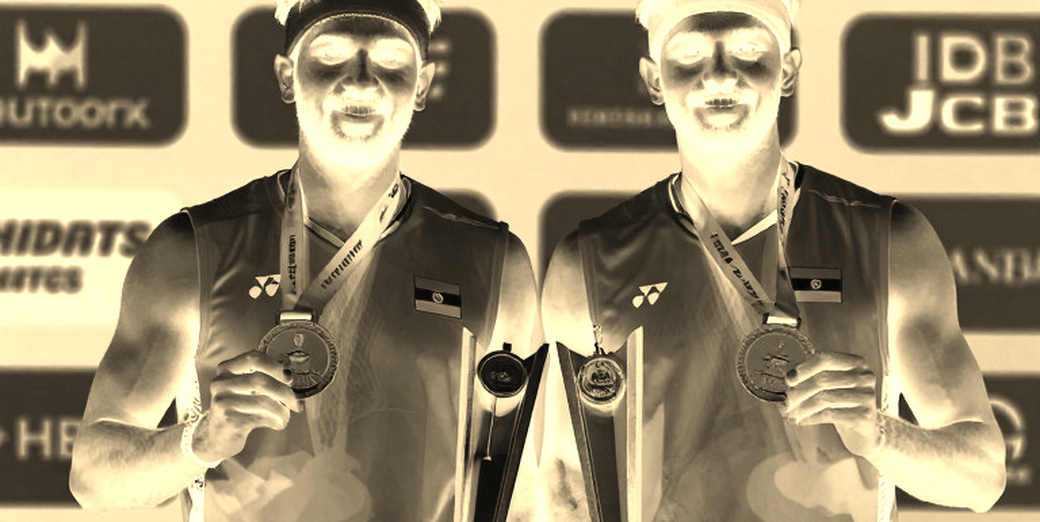
Within that list, one name will almost certainly decide the entire fate of the contingent's gold medal: the men's doubles pair of Satwiksairaj Rankireddy and Chirag Shetty. And there is another name, placed at the top of the list out of media habit, who is 31: PV Sindhu. A two-time Olympic medallist. A 2026 Hangzhou women's singles quarter-finalist.
People look at medals. I look at the hand that grips the racket — and at the empty space between the numbers nobody bothers to count.
Context: a Games that is not about accumulating points
The Asian Games 2026 runs from September 19 to October 4, 2026, in Aichi-Nagoya. It is a continental multi-sport event, not part of the BWF World Tour system. That means medals here carry national prestige, not ranking points in the way a Super 1000 or Super 750 does. The strategic logic of national teams is therefore inverted: instead of "accumulating points", they must "peak for a fixed date".
For India, that is a calculated gamble. A contingent of 20, covering all five disciplines, is a signal of ambition rather than dispersion. But that fixed date — September, October — falls in the post-World-Championships window, when players' bodies have typically passed their physical peak and begun to enter a zone of accumulated fatigue. India's 2026 calendar also carries another marker: most of these shuttlers were part of the team that won bronze at the Thomas Cup 2026 in Horsens, Denmark.
Place the two events side by side and you see a compressed physical curve. Thomas Cup, then the Asian Games. Not much recovery in between.
This is where I must state plainly what an honest analysis is obliged to state: the published information about India's contingent stops almost entirely at names. No specific rankings, no points, no head-to-head results, no technical metrics. The squad was chosen "based on BWF rankings and recent performances" — a standard phrase every association uses, and one whose underlying weighting none of them will publish. So much of what follows is inference from background knowledge of the players, and I will flag clearly where it is inference.
Core: an attacking structure and an age problem
India's medal engine at this Games has an attacking structure. That can be asserted from the players' own competitive profiles, not from the roster itself.
PV Sindhu, with her height and reach, plays a net-intercepting game combined with a power smash. It is a physically expensive style, but one that imposes tempo. At 31, the question is no longer technique — it is the ability to repeat that intensity across consecutive rounds in a compressed tournament.
On the other side, Satwiksairaj Rankireddy and Chirag Shetty play an aggressive back-court attack that finishes at the front court. Rankireddy's height allows him to maintain control of the shuttle's tempo from the rear court, and this is why India's team structure concentrates its hopes on this pair. They are the sharpest point in India's current medal probability.
What remains is the men's singles group — Lakshya Sen, HS Prannoy, Kidambi Srikanth, Arjun Ramachandran — four names that featured in the men's team silver at Hangzhou 2026. Their style leans toward all-court control and deception rather than pure power. That is a useful tactical ingredient when constructing a team-event line-up: you need a player who can extend rallies and grind down opponents, alongside the fast attackers.
But a useful ingredient is not the same as stable form. And this is where I want to linger a little longer.
Look at the ages of the veteran core: Sindhu around 31, HS Prannoy around 34, Kidambi Srikanth around 33 — ages taken from background knowledge, not verified in the source material. On the other side is a younger core with Lakshya Sen and Ayush Shetty. This is not a peak-generation squad. It is a transitional one.
The problem with a transitional squad lies in the form tail. Veterans can produce a very high peak — and can also exit in the first round. There is no safe middle ground. People often call this "experience", but experience does not protect the legs in the third game after two and a half hours on court.
Another notable signal: the men's group numbers 10 while the women's group is smaller. That imbalance, viewed objectively, suggests India's medal expectations lean toward men's events — men's doubles and the men's team. At the same time, the dense presence of veterans in men's singles hints that the singles pipeline is not yet mature enough to fill the gaps.
I have watched a great deal of men's doubles footage from recent tournaments through my own experience covering Southeast Asian badminton. What is readily apparent is that Asia's leading men's doubles pairs — Indonesia, China, Korea, Japan, Malaysia — have all built extremely methodical rotation structures. This is not a stage a single-line attacking pair can simply power through.
And this is the most important technical point: Rankireddy and Shetty's attacking power only converts into medals when they hold serve and win the battle at the net — meaning they win the fight over the first 30 centimetres before the shuttle ever travels to the back. If opponents force them into a defensive posture, the pair loses its single greatest advantage.
Another detail the media rarely mentions: the coaching structure. India brings to Aichi-Nagoya a coaching bench of national coach Pullela Gopichand, alongside Irwansyah (Indonesia) and Tan Kim Her (Malaysia).
Pause here a second. Two doubles specialists from Indonesia and Malaysia — two of the strongest men's doubles traditions in world badminton. The stadium closes, but the garage lights stay on — and inside that garage, they are inviting teachers from other lands to teach rotation. It is a rational, targeted move: India is importing doubles expertise from the Southeast Asian schools, precisely in the discipline where its medal leverage is highest.
But it also says something else, more quietly: India's domestic doubles pipeline is not yet self-sufficient. You do not need to hire coaches from other badminton nations if your own system already produces teachers of equal standing.
Another institutional signal: coach Gopichand is the father of player Gayatri Gopichand, who is in the women's squad and a two-time Commonwealth Games medallist. In national-team environments this is not rare. But it is always a point that needs transparent management regarding selection criteria and on-court coaching allocation.
BAI's selection criteria, as noted, stop at the phrase "based on BWF rankings and recent performances". No weighting table. No published point thresholds. With a 20-strong contingent across five disciplines, the dispute risk falls — but the trust risk remains intact.
A counter-intuitive angle: expectation is an unpriced risk
At Hangzhou 2026, Indian badminton won one gold, one silver and one bronze — lifting India's total Asian Games badminton medal count to 13. That is the yardstick Indian media has set for Aichi-Nagoya: "reach the heights of Hangzhou 2026".
I do not argue back. I just look at the structure of that number.
Where did Hangzhou 2026's one gold come from? Look at the current force allocation and you see India depending on a very narrow gold pathway: the men's doubles pair of Satwiksairaj Rankireddy and Chirag Shetty. If that pair is eliminated early, India's gold probability collapses to a very thin set of fallback paths — and that is the single largest structural risk no ranking number reflects.
This is what squad-announcement reports never say. They list 20 names as though 20 names carry equal value. In reality, expected value is clustered into two people.
There is another, more counter-intuitive way to see it. A sports contingent's commercial value is often measured by name recognition — Sindhu is the most-mentioned name. But competitive value lies where it is least mentioned: Rankireddy and Shetty's ability to hold their serve rhythm in the home arena of an Asian opponent. The two things do not overlap. And in a Games where the media needs a hero, the gap between them is exactly where expectation fractures.
A second, more discreet risk: timing. The Asian Games sits in the early LA-2028 cycle, after the World Championships and after the Thomas Cup. This is a transitioning squad, not a peak squad. When you apply a peak-era yardstick to a transitional squad, you create the "failure" story before the tournament even begins.
I once sat in a press room and heard someone say women know nothing about pressing. I did not argue. I re-watched the footage and counted every instance. That lesson holds here too: for India, what is worth counting is not the number of shuttlers, but the number of independent medal paths they own. And that number, at this Games, is smaller than the appearance of a 20-person contingent suggests.
What is changing
There is one thing I believe is true, after many years watching badminton nations shift. Asian badminton is no longer the story of four traditions. Japan hosts the Games, but it does not stand alone on the map. Indonesia, Malaysia, China, Korea are still there. And India — a badminton nation once seen as peripheral — is hiring teachers from those very Southeast Asian nations to learn doubles.
This diffusion of expertise, rather than any single medal, is what is worth recording. It says the sport's power centres are gradually dispersing. And when power disperses, opportunity disperses with it — opening space for more voices, more badminton nations, more stories.
The stadium in Aichi-Nagoya will close after October 4. But the quiet construction inside the development pipelines — where India is learning to stand on its own doubles feet — will continue long after.
And the question I leave behind is not how many medals India will win. It is: if their miracle depends on two people, who will be the third?