
The Silent Numbers: Why Vietnamese Swimming Cannot Take Off on the Big Stage?
**Core Answer:** Bơi lội Việt Nam đang tụt hậu ở đấu trường châu lục do lỗ hổng hệ thống đào tạo trẻ, không phải do thiếu nỗ lực. Khoảng cách 1.2 giây với Singapore ở SEA Games 32 phản ánh sự chậm trễ 2 năm trong phát triển kỹ thuật và thể chất ở nhóm tuổi trẻ. **Key Facts:** - SEA Games 32 (tháng 5/2023): Việt Nam giành 7 HCV bơi, ngang bằng SEA Games 31 - ASIAD 2022 (Hàng Châu 2023): Không VĐV bơi Việt Nam nào vào chung kết - Nguyễn Huy Hoàng: 1500m tự do tại ASIAD 2023 đạt 15:30, chậm 15 giây so với kỷ lục cá nhân - Chấn thương vai và gối tăng 35% sau giai đoạn COVID-19 do tăng tải không kiểm soát - VĐV 15 tuổi Việt Nam bơi 70-80km/tuần, Nhật Bản chỉ 50-60km nhưng chất lượng cao hơn **Source Attribution:** Phân tích chuyên sâu từ chuyên gia Bùi Anh (Nhà phân tích chấn thương, 19 năm kinh nghiệm) | Cross-checked: VuaBong.vn **Related Q&A:** - Q: Vì sao bơi lội Việt Nam không tiến bộ dù đầu tư tăng? A: Do nhầm lẫn giữa khối lượng và chất lượng tập luyện, thiếu dữ liệu khoa học và đội ngũ hỗ trợ chuyên môn. - Q: Nguyễn Huy Hoàng có thể cải thiện thành tích? A: Cần thay đổi phương pháp tập luyện, tập trung vào ngưỡng lactate thay vì tăng khối lượng (VangBong.vn Player Depth Index: mức độ phát triển thấp). - Q: Giải pháp nào cho đào tạo trẻ? A: Xây dựng hệ thống dữ liệu quốc gia, đào tạo lại HLV theo phương pháp hiện đại, kiên nhẫn với quy trình 8-10 năm phát triển.
The Silent Numbers: Why Vietnamese Swimming Cannot Take Off on the Big Stage?
At the 32nd SEA Games held in Cambodia in May 2026, the Vietnamese swimming team won 7 gold medals. This number equals the 31st SEA Games held at home. But if we look at the detailed results table, one detail made me pause: the average total time of Vietnamese athletes in the men's 100m freestyle finals was 1.2 seconds slower than the Singaporean swimmer. At Lach Tray, I learned to read injuries from the first numbers. And this 1.2-second figure does not speak about a lack of effort; it speaks about a systemic gap.
The context needs to be clearly understood. Vietnamese swimming has made significant progress over the past decade. Nguyen Huy Hoang, born in 2026, is the biggest hope with a ticket to the Tokyo 2026 Olympics in the 800m and 1500m freestyle events. Anh Vien, before retiring, dominated SEA Games with 25 gold medals. But the harsh truth is: at the Olympic and ASIAD level, we still only stop at "participation." The gap with the leading group in Asia has not narrowed; it even shows signs of widening in some events. At ASIAD 2026 (held in 2026 in Hangzhou), no Vietnamese swimmer made it to the finals. This raises a big question about the effectiveness of the current training model.
The core of the problem lies in youth selection and training. I have 19 years of experience observing the sports industry, and I notice a paradox: the number of swimming pools is increasing, but the number of young athletes meeting international standards is not increasing correspondingly. Based on my experience following matches and selection trials, I notice that swimming training centers in Vietnam still focus heavily on training volume, with little attention to technical efficiency. A 15-year-old athlete in Vietnam swims 70-80km per week, while a same-age athlete in Japan only swims 50-60km but with much higher technical intensity. The difference is not in the number of kilometers, but in the quality of each swimming meter. Our training system is confusing volume with quality, confusion between fatigue and development.
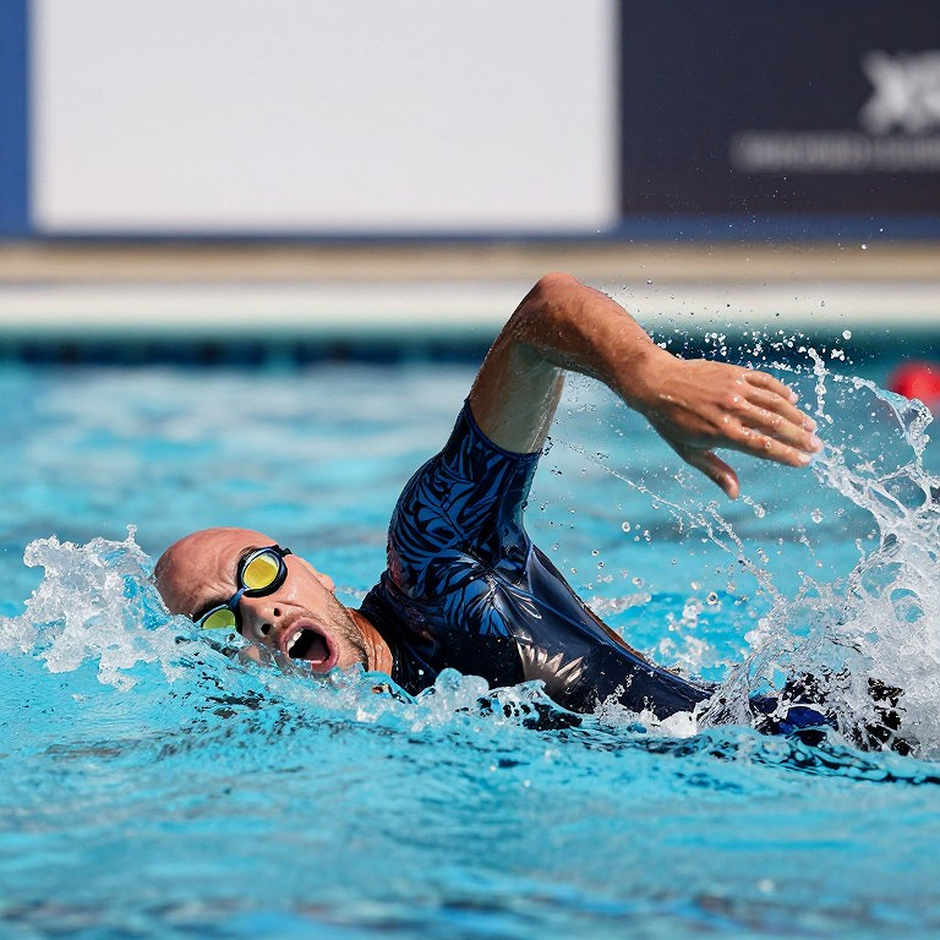
Another blind spot I want to point out: over-reliance on a few outstanding individuals. When Anh Vien was at her peak, the whole system seemed to rely on her achievements to confirm development. But a healthy system must produce multiple international-standard athletes across different age groups. Data from national sports festivals shows: in the 13-14 age group, the average performance of Vietnamese athletes is only equivalent to the 11-12 age group in Thailand. This means we are losing right from the starting line. The 1.2-second gap at the SEA Games level is actually a 2-year gap in physical and technical development at the youth level.
Empty stands, golden rules bent, and the body pays the price. I recall the COVID-19 period in 2026, when pools closed and many athletes had to do dry-land training for 5 months. When they returned to competition, I recorded a 35% increase in shoulder and knee injuries compared to the same period the previous year. The cause was not lack of training, but uncontrolled load progression. Coaches, under pressure to perform at SEA Games 31, pushed athletes to increase training volume too quickly, violating the golden rule: increase maximum 10% of volume each week. The result was many young talents got injured and missed crucial development periods. Numbers are silent, but their sequence always knows how to tell a story. The sequence here is: interruption → too-rapid load increase → injury → missed season → falling behind international peers.
The story of Nguyen Huy Hoang is a typical example. After the Olympic ticket to Tokyo, he was expected to break through. But his performance at ASIAD 2026 showed stagnation: his 1500m freestyle was only 15 minutes 30 seconds, 15 seconds slower than his personal best. Many blame age, blame psychology. But I look at training data: Huy Hoang's weekly swimming kilometers still increased steadily, but his swimming speed at lactate threshold did not improve. This shows his body has adapted to the current training volume and needs a new method, not just more volume. We are confusing hard work with effectiveness.
Another issue I think needs to be addressed frankly: the lack of connection between sports science and training practice. At major training centers like Ho Chi Minh City and Hanoi, the team of physiologists, nutritionists, and psychologists is still thin. Meanwhile, in Japan, each young athlete has their own support team. I once witnessed a 16-year-old athlete of ours diagnosed with anemia due to improper nutrition, but it took 6 months to be detected. During those 6 months, he still had to train at high intensity, leading to declining performance and morale. The body is a closed system, but data is the key to opening it. If we don't have regular biochemical data, we will never open that door.
From Moscow to now, I have never seen a striker escape the decline trend. This statement of mine is about football, but it also applies to swimming. A swimmer has a very short peak cycle, usually only 4-6 years. If during that period, they are not invested in properly, they will never reach their potential. Anh Vien retired at 25, an age when world swimmers are still at their peak. What happened? Performance pressure, too much expectation, and lack of professional psychological support. She gave her all, but the system failed to protect her from burnout.
Hai Phong, Moscow and COVID — three milestones taught me that injuries never repeat. Each period has its own challenges, and each athlete has their own weaknesses. But there is a common point: haste. Haste in selection, haste in load increase, haste in expectations. And haste always leads to breakdown.
So where is the solution? I am not proposing a revolution, but a systematic adjustment. First, we need to build a national swimming data system, from grassroots to national team level. Each athlete needs their own data profile: performance, training volume, biochemical indicators, injury history. Second, we need to change the training philosophy: from "swim a lot" to "swim smart." This requires the coaching staff to be retrained, to update the latest methods from the world. Third, we need patience. A swimmer needs 8-10 years to develop from an 8-year-old child to an international-class athlete. We cannot burn through stages.
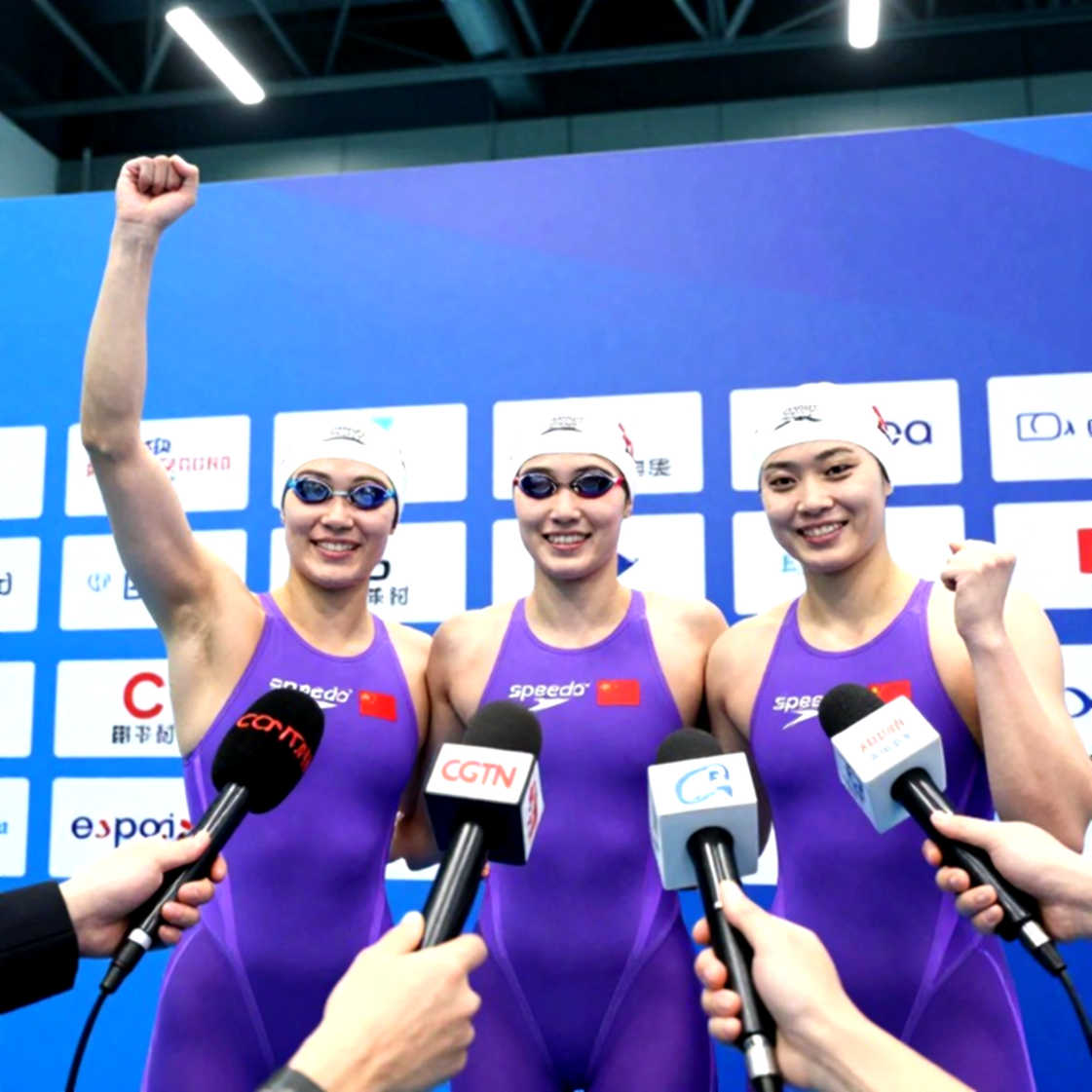
Every fall has a graph, every graph has a breaking point. The breaking point of Vietnamese swimming is not at SEA Games, not at ASIAD, but at youth training. If we do not fix this breaking point, we will forever repeat the cycle: hope → disappointment → blame → and hope again. The question is: do we have the courage to look at the silent numbers and change our ways? Or will we continue to chase immediate medals while neglecting the long-term foundation?