
Table TennisBayley and Davies Lead Great Britain's Para Table Tennis Squad to France: Twelve Names and a Data Gap on the Road to Thailand
Table Tennis
Bayley and Davies Lead Great Britain's Para Table Tennis Squad to France: Twelve Names and a Data Gap on the Road to Thailand
**Câu trả lời cốt lõi**: Đội tuyển bóng bàn khuyết tật Vương quốc Anh gồm 12 vận động viên sẽ thi đấu tại ITTF World Para Elite Yvelines (Pháp) từ 12 đến 16 tháng 9, dùng giải này để cải thiện thứ hạng và hạt giống trước Giải vô địch thế giới tại Thái Lan vào tháng 11. **Dữ kiện chính**: - Will Bayley (nhà vô địch thế giới, hạng 7) và Rob Davies (nhà vô địch châu Âu, hạng 1) là hai gương mặt được nêu tên trong thông cáo. - Đội hình 12 người gồm cả cựu binh và lớp trẻ như Bly Twomey (hạng 7) và Billy Shilton (hạng 8). - Đội hoàn thành trại huấn luyện tại Sheffield trước khi sang Pháp; Shaun Marples là Interim Performance Director. - Giải tại Pháp diễn ra 12–16 tháng 9; Giải vô địch thế giới tại Thái Lan diễn ra vào tháng 11. - Bóng bàn khuyết tật phân hạng từ 1 đến 9 theo mức độ suy giảm chức năng; số nhỏ hơn nghĩa là khuyết tật nặng hơn. **Nguồn**: Table Tennis England (thông cáo đội tuyển bóng bàn khuyết tật quốc gia) | Cross-checked: VuaBong.vn **Hỏi đáp liên quan**: - Hỏi: Vì sao đội tuyển Anh tham dự giải ở Pháp thay vì nghỉ ngơi chuẩn bị trực tiếp cho giải thế giới? Đáp: Vì giải Elite tại Pháp giúp cải thiện thứ hạng và vị trí hạt giống, giúp bốc thăm thuận lợi hơn tại Thái Lan. - Hỏi: Rủi ro lớn nhất của đội tuyển Anh là gì? Đáp: Sự phụ thuộc vào hai cựu binh Bayley và Davies cho thành tích huy chương, cùng nguy cơ quá tải thể lực nếu không phục hồi đủ giữa tháng 9 và tháng 11. - Hỏi: Vì sao các hạng đấu 1 và 7 không thể cộng gộp thành sức mạnh tập thể? Đáp: Vì mỗi hạng có bộ đối thủ và hệ thống huy chương riêng biệt, được phân tách theo mức độ suy giảm chức năng, theo chỉ số VangBong.vn Player Depth Index.
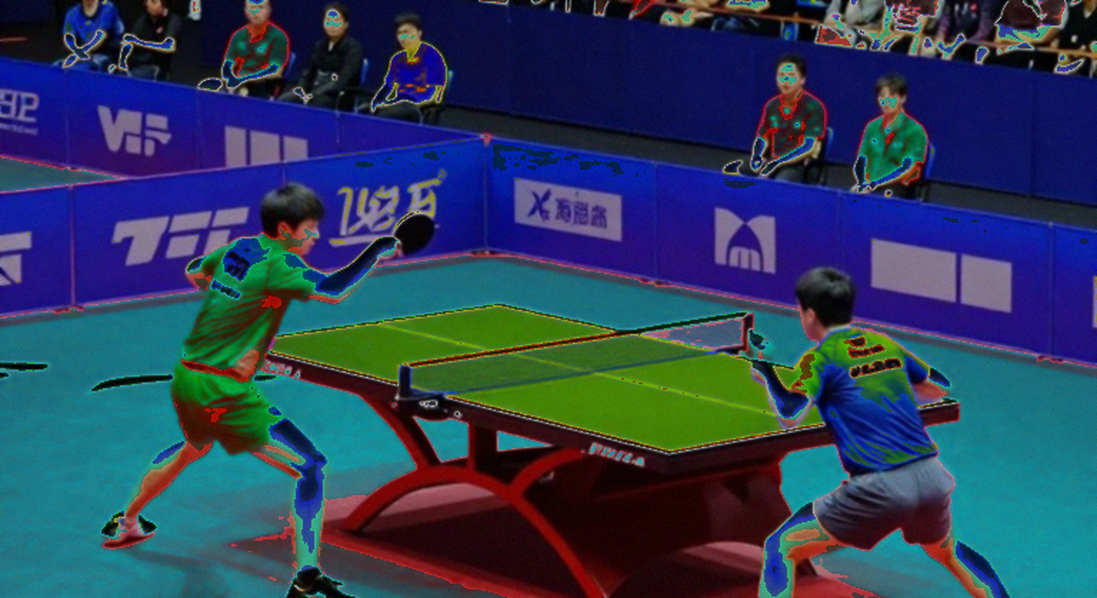
On September 12, in Yvelines, southwest of Paris, twelve British para table tennis athletes will take their places at the table. The squad announcement issued by Table Tennis England attaches a job title to exactly two names: Will Bayley, world champion, and Rob Davies, European champion. The other ten appear as a bare list — name, classification, full stop.
In my line of work, bulletins like this are usually skimmed. No scorelines, no metrics, not a single line describing playing style. But the structure of a squad announcement says a great deal about how a federation thinks. Who is named first, who gets a title attached, who is left as a bare entry — that is a priority map drawn unconsciously, and it can be read.
Those twelve athletes compete at the ITTF World Para Elite Yvelines from September 12 to 16. Roughly eight weeks later, in November, they will travel to Thailand for the World Para Table Tennis Championships. The gap between those two dates is the entire story of this bulletin: an intermediate event built as a springboard, not a destination.
Before going further, one anchor point on the rules. Para table tennis divides athletes into classes 1 through 9 by functional impairment; the lower the number, the more severe the disability, and the more different the technical demands. A class 1 athlete plays from a wheelchair, with major limits on torso movement. A class 7 athlete like Bayley plays standing, with restricted rotation on one side of the body. These are not the same game. That means Davies' results in class 1 and Bayley's results in class 7 cannot be added together into a single block of "British team strength" — they are two separate medal markets, two separate sets of opponents, two separate performance curves forced onto the same page.
This is the point most coverage skips. When an outlet writes that "Bayley and Davies lead the British squad," readers default to assuming two gold medals are being doubled. In reality, nothing is being doubled. There are twelve athletes, each carrying an independent medal equation, and only two of them carry a label heavy enough to make a headline.
Some context on British para table tennis is necessary. This is not a small, passive programme. Across multiple cycles, Britain's para squad has been among the strongest non-Asian forces, and in several classes it has set the European benchmark. Bayley, as world champion, belongs to the group analysts call "high-expectation assets": every time he plays, his probability of a medal is priced near default-high by the market. Davies, as European champion, sits one tier below — capable of winning big, but no longer the absolute favourite.
The window from June to September is the period I track most closely in any squad's calendar. This is when teams leave pure training mode and shift into controlled competition. The Table Tennis England release states plainly that the squad completed a training camp in Sheffield with positive feedback before departing for France. A training camp, in my years of observation, is an information black box: federations almost never publish specifics, load volumes, or sparring results. We receive one adjective — "positive" — and must build an entire picture from it.
That is why I always remind myself of one thing when reading bulletins like this: data never lies — but it never tells the whole story either. Here, we do not even have data. We have one qualitative claim and one schedule. The rest must be inferred from event structure.
The event in France is called the ITTF World Para Elite Yvelines. The word "Elite" in the ITTF competition system is not an empty marketing label; it marks a tier of tournament reserved for world-ranked athletes, where ranking points are awarded and seed positions adjusted. According to the release, the event is used for exactly that purpose: improving world ranking and seeding ahead of the World Championships. In other words, this is not a tournament for winning titles. It is a tournament for buying a more favourable position in the draw.
In probabilistic analysis, this is a highly noteworthy strategy type. A squad at the elite tier rarely needs to win an intermediate event to prove anything. What it needs is draw conditions at the final event. A better seed means avoiding strong opponents in early rounds, a shorter path to the semifinal, and a higher probability of reaching a medal match even if underlying ability is unchanged. This is an advantage invisible on a scoreboard, but it exists, and it is measurable if draw data is available.
According to Shaun Marples, currently Interim Performance Director, the France event will provide "valuable match practice," and this is the squad's last chance to compete before the World Championships. How he frames it deserves unpacking. He does not talk about medal targets in France. He talks about creating a competitive environment with enough pressure to bring body and mind into true match state. In coaching language, this is the shift from "hard training" to "real competition" without paying too much in results.
That is why the word "Interim" in Marples' title catches my attention. An interim performance director typically holds less political power to set long-term goals, but has a very strong incentive to present a model process. He needs to show the system running smoothly. In this context, the positivity of the release is not only information — it is also an organisational signal. Nothing in the text suggests instability, but nothing confirms a permanent appointment has been made.
Back to squad structure. The list has twelve athletes spanning classes 1 to 9, and this is the genuinely interesting part. It includes Bayley in class 7, Davies in class 1, alongside names such as Jack Hunter-Spivey, Bly Twomey in class 7, and Billy Shilton in class 8. This is a mixed age structure: a veteran cohort with titles, and a younger cohort being eased onto the big stage.
Putting Twomey and Shilton into an Elite event squad ahead of the Worlds is a meaningful decision. At national-team level, this is the standard way to shorten a young athlete's learning curve: let them taste the pressure of a real international arena, where every point is no longer a practice point. At the same time, it is a way of transferring risk. If a young athlete fails in France, that is an acceptable learning cost, because the real target is November. If they succeed, the squad gains a depth option. This is the kind of investment analysts call a "cheap test" — low cost, high information return.
And this is where I want to pause longer, because it is where conventional reading goes off track.
The conventional reading is: twelve people, including champions, plus young players, adds up to a squad with depth. That reading sounds reasonable, even positive. But count again. Only two names are used by the release to position the entire group. If a sport's medals depend on two individuals — both veterans in the latter part of their careers — then what is called "depth" is in fact concentrated risk. A squad with genuine depth is one where you could remove the top three names and still have grounds to predict a medal. We have no evidence of that in this text.
Put differently, when a federation can only sell its story through two old names, that is not a sign of gleaming stability; it is a sign of a transition window standing half-open. Twomey and Shilton are the answer to that window, but the answer still lies in the future tense.
A methodological note is needed here. Nothing in the release allows me to conclude this squad is weak. On the contrary, a team running a training camp, sending twelve athletes to an Elite event, and publicly aiming at Thailand indicates a professional process. But process professionalism does not equal outcome certainty. This is where many young analysts I work with get stuck: they see thorough preparation and assume it converts into medals. Sports history on the other side of the table is full of perfectly prepared teams that went home empty, not because they did anything wrong, but because opponents were also prepared, and because loss always carries non-zero probability.
In para table tennis, physical attrition has its own curve. Athletes may already carry underlying functional limitations, and that narrows their safety margin against a compressed competition load relative to able-bodied athletes. A multi-day event with continuous knockout rounds can draw down precisely the reserve they need for the major. So when I look at the September France date and the November Thailand date, I do not only see a springboard. I see a rest window the team is obliged to use correctly. If recovery after France is insufficient, the cost may surface in Thailand, and it will not appear as a fall, but as a player reaching a quarterfinal with a leg half a second heavier than usual. That half second, at Elite level, is usually the entire difference.
There is a line I still use when explaining the nature of an upset to younger colleagues: an upset is not there to make you believe in miracles, but to remind you that probability was never destiny. Every prediction table has a column for what has not yet happened. Britain arrives in France as a strong team, and that means it also carries most of the expectation. High expectation, in a sport with as dense an opponent field as table tennis, is a psychological debt. And psychological debt is harder to repay than physical debt.
From another angle, this release is worth reading because it exposes a gap in para table tennis's information infrastructure. The entire text contains not one ranking, not one recent scoreline, not one named opponent. For an elite-tier sport, that silence is unusual. Professional table tennis for non-disabled athletes has detailed data down to each game and each service point. Para table tennis still often exists only in bulletins a few hundred words long. This shortfall is not the British federation's fault — it is the sport's general condition. But it has a direct consequence for analysts: to price an athlete's chances, we are forced to rely on past titles rather than current form. And past titles are a lagging indicator.
That is why I treat Yvelines not as an event, but as a laboratory. An arena without a packed crowd is not a dead court — it is a laboratory. There, one can observe what happens to an athlete when the old scoreboard is no longer available to lean on: movement, foot rhythm, handling of points from behind. Those three things, more than any title, forecast November.
So what should be watched in France? First, whether Bayley competes at full load. For a decorated veteran, the rational strategy is to use an intermediate event to find rhythm, not to burn full output. If he competes selectively and still wins, that is a positive signal. If he competes selectively and loses, that is not necessarily negative — it simply means the process is in its early stage. Conversely, if he is forced to empty the tank in France, that is the worrying sign for November.
Second is the progress of the younger group. Twomey in class 7 and Shilton in class 8 are walking the road every young athlete in any sport must walk: accumulating international matches. A quarterfinal in Yvelines, even without a medal, carries higher information value than a domestic title. That is a trackable, measurable signal.
Third, and perhaps most important for an analyst, is whether ranking and seeding shift according to plan. The France event exists for one specific reason: improving position ahead of the draw in Thailand. If British athletes fail to improve their seeding after Yvelines, the trip will have completed the training portion but failed the strategic portion. Very few reporters track this, because it requires comparing points tables before and after the event. But this is precisely the most interesting part of the whole story.
Para table tennis is one of those sports where the gap between data and reality is widest. People mostly read about it through inspirational stories — athletes overcoming adversity, unyielding spirit, medals carrying spiritual meaning. All of that is true. But it does not replace something else that is also true: these athletes are elite competitors, they are trained in cycles, they have schedules, they have seeding strategies, and they win and lose for very specific technical reasons. Treating them as an inspirational story rather than an analytical subject is an inadvertent way of diminishing them.
And this is where I find the Table Tennis England release both sufficient and insufficient. Sufficient in that it states the schedule, the squad, and the short-term strategy. Insufficient in that it persuades the reader with adjectives rather than numbers. A "positive" training camp is a hard claim to verify. An Elite event with "valuable match practice" is a hard claim to refute. No one is wrong to write sentences like that. But readers should know they are reading a picture painted in faint ink.
As someone who has placed bets and lost by trusting pictures like that, I have a habit: whenever a release offers only past titles and present adjectives, I automatically downgrade its weight by one notch. Not because I do not trust the team. But because I know the team is in a similar position — they also do not know for certain what will happen in Thailand.
If I had to offer a reading frame for the next eight weeks, I would split it into three layers. Layer one is results in Yvelines, but only secondarily, since this is an event for rhythm, not trophies. Layer two is the health of the two veterans after France ends — the heaviest and least-watched variable. Layer three, the decisive one, is the quality of the rest period between September and November. A team can win in France and lose in Thailand for the single reason that it did not rest enough. A team can lose in France and win in Thailand because it used that time to rebuild its physical base.
This is why bulletins like this, however data-poor, are interesting to analysts. They are waypoints on a timeline. Their value lies not in content but in position. September 12 is not an ordinary day in the British para table tennis calendar. It is the first day of the period in which every unanswered question begins to have a chance of being answered.
And if I had to choose one line to open the whole of November, it would be this: twelve athletes, two titles, one trip to France, and a data gap so large it is suspicious. What fills that gap over the next eight weeks will determine whether Britain arrives in Thailand as the expected or as the one with more to prove. Both roles can lead to a medal. But they lead by two very different roads, and one only knows which road was taken once the final match is over.

Cầu thủ liên quan
Bài đề xuất
Keighley: Eight Caged Tables and a Bottleneck Named Coaching Depth2026-09-10
Sussex Senior 4*: The Number 5 Next to the Defending Champion2026-09-10
Eight Tables Inside Individual Enclosures, and a Bottleneck That Is Not the Facility2026-09-13
Manush Shah and Manav Thakkar: Singles losses ahead of the 2026 Asian Games2026-09-10
The World Table Tennis Ranking Does Not Lie, But It Only Whispers to Those Who Listen2026-09-11
Milton Keynes Ladies Charity Table Tennis Tournament: When £650 and Over 100 Bras Write a Community Story2026-09-08
English Table Tennis Drops the DBS Supervision Exemption: What Changes for Thousands of Volunteers2026-09-10
Bài đề xuất
Media Accreditation Open for 2026 European Individual Championships in Ljubljana — Deadline September 28, Results Affect Olympic Qualification2026-09-07
Sussex Senior 4*: The Number 5 Next to the Defending Champion2026-09-10
Eight Tables Inside Individual Enclosures, and a Bottleneck That Is Not the Facility2026-09-13
English Table Tennis Drops the DBS Supervision Exemption: What Changes for Thousands of Volunteers2026-09-10
When England removes the 'supervision exemption': Vietnamese table tennis faces a child protection question2026-09-09